Why Loctite is important and when and where to use it
By
July 26, 2026
Have you had a screw or nut bolt back out on you? This is primarily due to vibrations and mostly attributed to the microscopic irregularities of metals which prevent a fastener from getting a good positive grip when it is metal on metal.
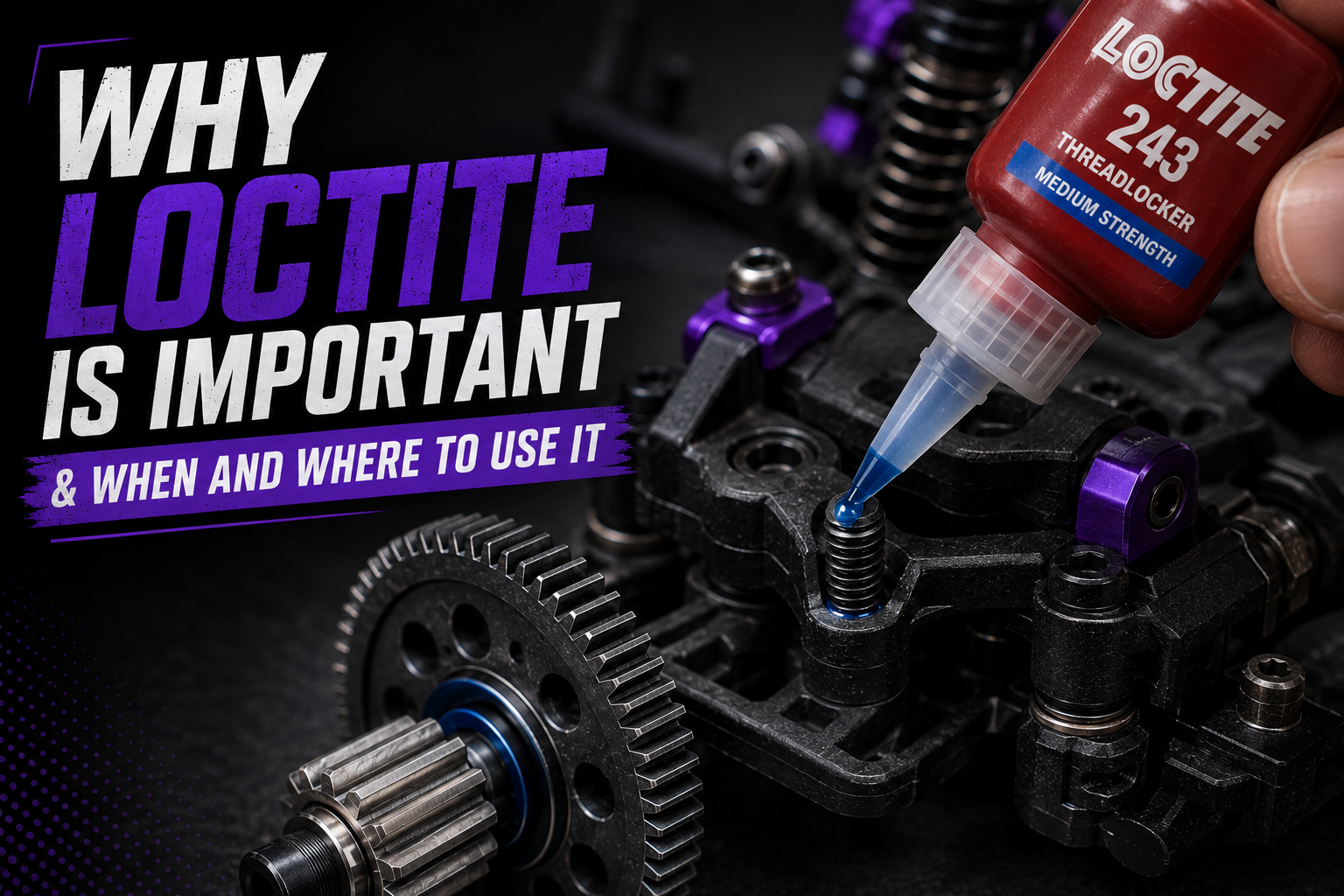
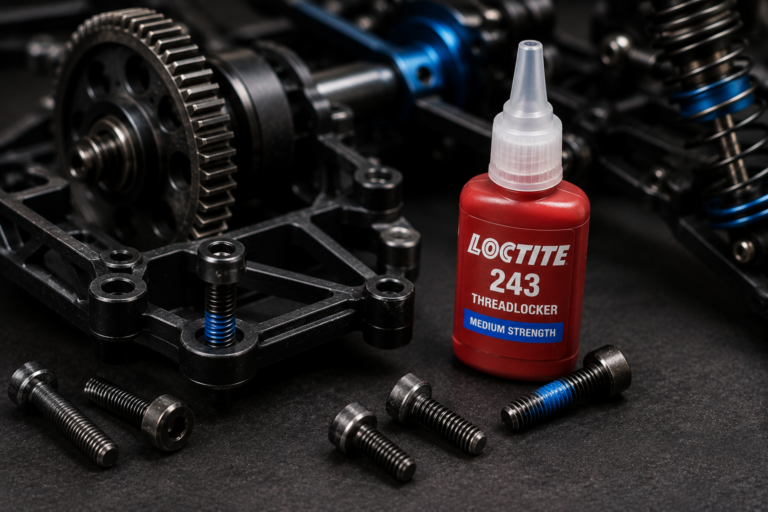
Loctite is an anerobic liquid and works in absence of oxygen between metal-to-metal fasteners. Loctite comes in low-medium and high strength as well as penetrating variants which can be applied after a fastener has been tightened. Sometimes it is advisable to use a locknut, if possible, to prevent vibration related loosening. However, for applications such as metal differential housings etc, it is more beneficial to apply Loctite to the threads of the bolt prior to tightening the fastener. During application, it is imperative to remove all grease or oils which will reduce the effectiveness of the Loctite and cause premature failure of the assembly.
Loctite should never be used on plastic components as it can significantly weaken the structure and cause it to strip/ break under use. And lastly Loctite can be used for ill-fitting bearings, in which Loctite takes up the slight gaps causing the bearing to spin on the shaft, however this may complicate disassembly as you may have to apply heat to remove it, the same goes with any high strength red thread lock. It is better to stick to medium strength or blue thread lock for RC applications as it makes disassembly easier considering you cannot use heat in a lot of places without causing significant damage to plastics around the area being heated. It is also important to allow the thread lock to gain strength for at least 3 hours to be able to reliably use the assembly, and for critical applications a full cure time of 24 hours is recommended.