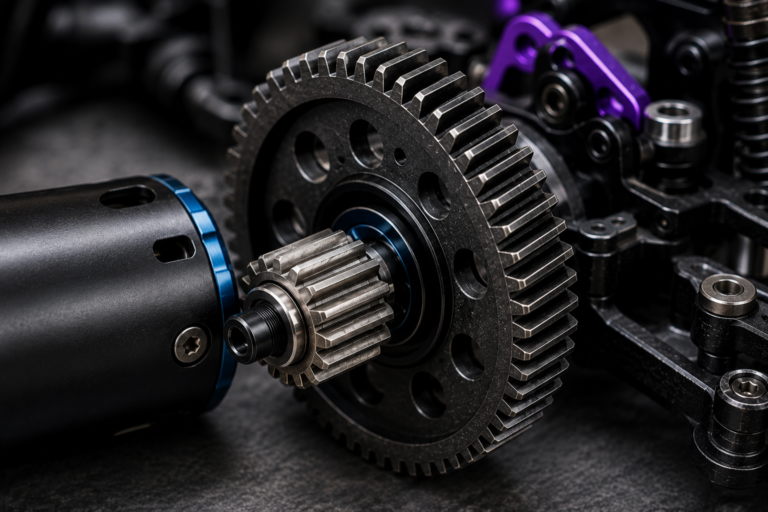
Keeping a correct mesh is imperative to the longevity of gears, as if the gears are too loose or too tight, they may prematurely wear out or wear out the components which work in tandem with them. Too loose a mesh can strip gear teeth due to harsh impacts each time you accelerate or decelerate. Too tight and you will cause added friction and heat which can damage your power system such as the motor. Here are some scenarios where you may have to adjust the mesh
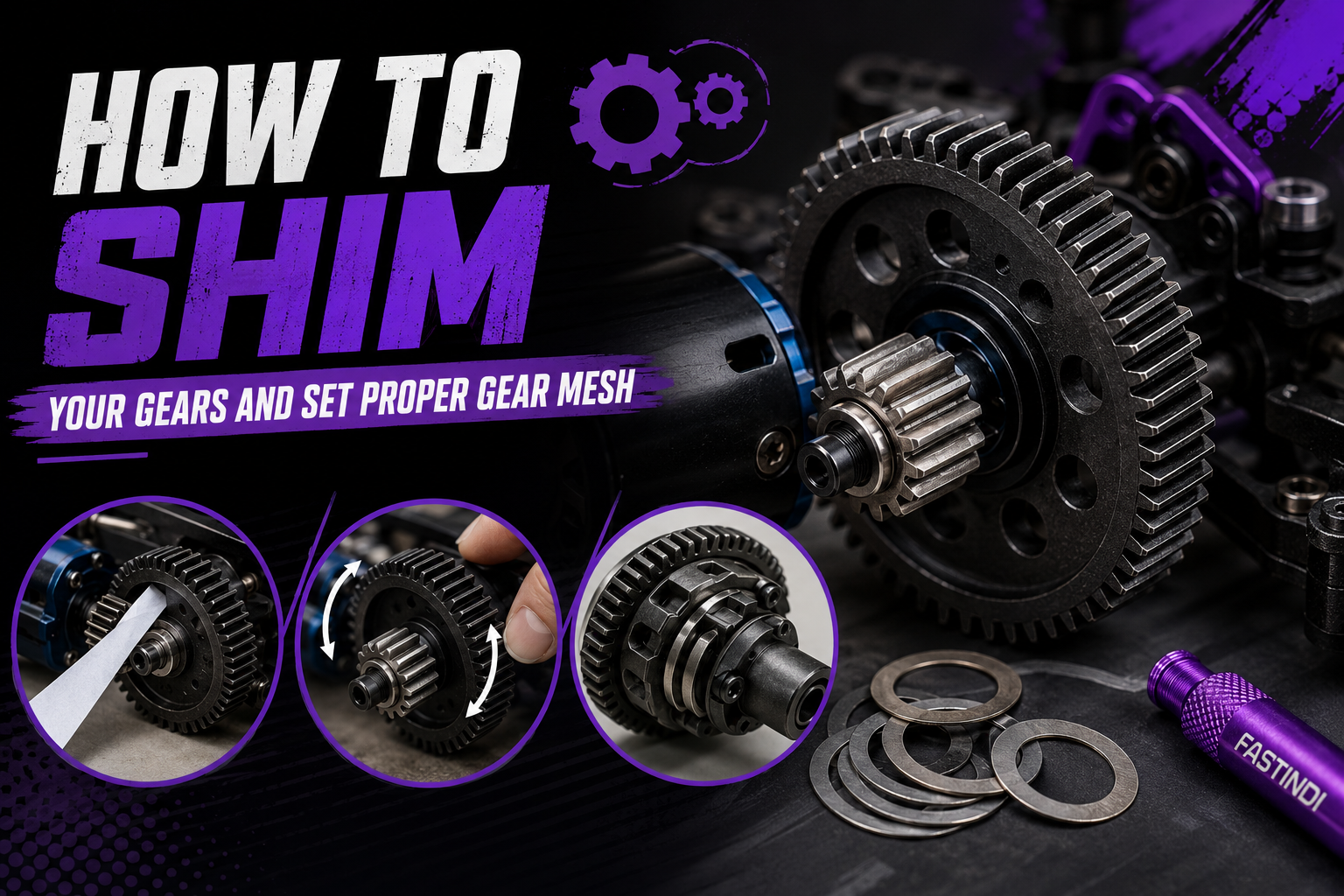
The Paper Method
You can feel a lot of play between your spur gear and motor pinion gear. The solution here would be to slide a paper strip between the gears and take up the slack, and that would give you the best adjustment possible.
Traditional Method
The other method is to rock the gear back and forth and get it as tight as possible while still being able to hear/ feel the back-and-forth motion. This will help you get the gears as close as possible without binding. Make sure to check the mesh in multiple spots around the spur gear.
Differential Mesh
For differentials that have seen use and have started clicking or you can feel side to side play while holding the output yokes, you will need small spacers called as shims, these shims are designed to take out slack from the gears which will help you get the gears as close as possible to each other to increase tooth engagement. Make sure to add spacers to the ring gear side to tighten the mesh, or you may end up with a mesh that is too loose, and you will destroy the gears. After this adjustment is complete if there is still a need for adjustment you should consider adding shims behind the pinion gear of the differential.
Once youve set your differential mesh properly it will last a very long time without needing future adjustment. And one thing to keep in mind is that some plastic bulkheads are more prone to getting deformed and causing play. For those flexible materials you’d be better off setting the mesh slightly tighter than you normally would and let it wear in.